

CALL YOUR TRUSTED LOCAL EXPERTSSM

Why Is Water Pooling Around My Furnace?
By Dave Musial: CEO of Four Seasons Heating, Air Conditioning, Plumbing, Electric.
- December 23, 2025
Discovering water pooling around your furnace signals a problem that needs immediate attention. This article explains the most common causes of furnace water leaks, provides repair solutions with verified cost ranges, and outlines when you can handle fixes yourself versus when professional service is necessary.
At Four Seasons, we’ve responded to thousands of calls about furnace water leaks across Chicagoland and Northwest Indiana. With 50+ years of serving the area, we know these issues inside and out.
What you’ll discover in this guide:
- Why high-efficiency furnaces produce water and what makes them leak
- The six most common leak causes and their solutions
- Repair cost ranges for each type of problem
- Prevention strategies that stop leaks before they start
- Warning signs that indicate a dangerous situation
Do You Have a High-Efficiency or Standard Furnace?
This matters because only high-efficiency furnaces produce water during regular operation.
- High-efficiency furnaces (90% AFUE or higher) use a secondary heat exchanger that cools combustion gases below their dew point, creating condensation. You can identify these by their white PVC exhaust pipes.
- Standard furnaces (80% AFUE or lower) have metal exhaust pipes and don’t produce condensation. If water appears around a standard furnace, look to other sources, such as humidifiers or AC components.
| Furnace Type | AFUE Rating | Exhaust Pipe Material | Condensation |
|---|---|---|---|
| High-Efficiency | 90%+ | White PVC | Yes |
| Standard | 80% or less | Metal | No |
Six Common Causes of Furnace Water Leaks
1. Clogged Condensate Drain Line
Dirt, mold, and algae build up inside drain lines over time, blocking water flow and causing backups. This is the single most frequent cause of furnace leaks.
| Symptoms: | Water pools during heating cyclesVisible debris in the drain line openingStanding water in the condensate trap |
| Repair Options: | DIY: Flush the line with equal parts white vinegar and hot water, repeating 2-3 times Professional: Technician uses specialized tools to clear stubborn clogs Cost: $0 (DIY) to $250 (professional) |
Winter freezing can also block outdoor drain lines in Chicago weather.
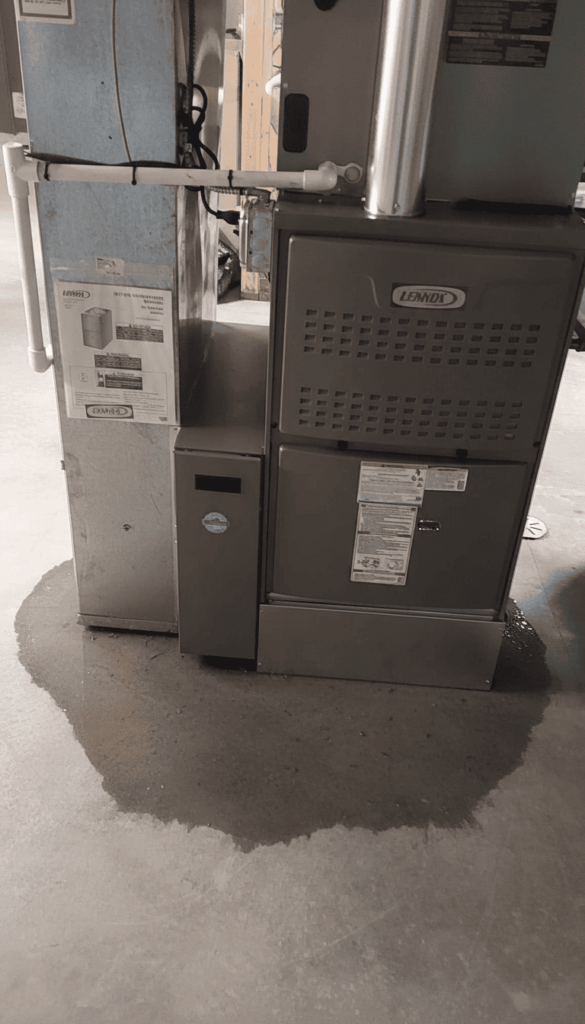
2. Failed Condensate Pump
Condensate pumps move water upward from basement furnaces to drain lines. These pumps typically last 3-5 years, and 90% of failures stem from preventable clogs or electrical issues.
Warning signs:
- Continuous running without pumping water
- Gurgling or buzzing sounds
- Visible cracks in the pump housing
- Water overflowing from the pump reservoir
| Component | Average Lifespan | Pump Cost | Installation Cost | Total |
|---|---|---|---|---|
| Condensate Pump | 3-5 years | $50 | $100-$150 | $150-$200 |
Solution: Replace the pump. At this price point, replacement beats repair for older units.
3. Rusted or Cracked Drain Pan
Metal drain pans corrode over time, developing rust holes that leak water onto your floor. This occurs in both furnace pans and AC evaporator coil pans.
Repair costs:
- Primary drain pan: $600-$1,200
- Secondary drain pan: $250-$600
- Average: $600
Modern plastic pans resist corrosion and last significantly longer than older metal versions.
4. Humidifier Leaks
Whole-house humidifiers connect to your water supply and drain system. Multiple components can fail:
- Clogged humidifier pad
- Cracked drain tubing
- Loose water supply connections
- Failed solenoid valve
Beyond the leak itself, humidifier water can introduce mold and bacteria into your air supply. The EPA reports Americans spend 90% of their time indoors, making air quality crucial for health.
Typical repair cost: $65-$250
5. Frozen Air Conditioner Coils
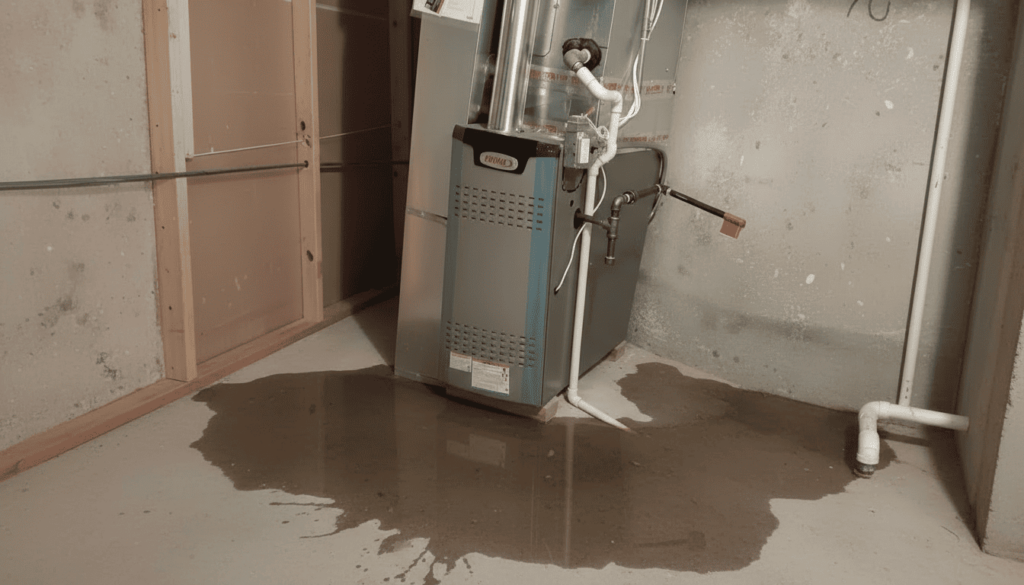
Summer leaks near your furnace often originate from frozen evaporator coils that sit in or near the furnace cabinet.
Causes of frozen coils:
- Dirty air filters are restricting airflow
- Low refrigerant levels
- Debris accumulation on coils
- Blocked return vents
Solution: Turn off the AC immediately. Let the ice thaw completely (several hours). Replace dirty filters. If freezing recurs, call for professional refrigerant and airflow diagnosis.
6. Cracked Heat Exchanger
This represents the most serious problem. Secondary heat exchanger cracks leak condensation, while primary heat exchanger cracks can allow carbon monoxide into your home.
Danger signs:
- Visible cracks during inspection
- Unusual odors near the furnace
- Soot accumulation
- Water pooling with no other obvious source
Replacement cost: $1,500-$6,000
Many heat exchangers carry 20-year to lifetime warranties. If your furnace is old, a complete replacement often makes more financial sense than repairing the heat exchanger.
Complete Leak Diagnosis Table
| Problem | Repair Cost | Can You DIY? | Response Time |
|---|---|---|---|
| Clogged Drain Line | $0-$250 | Sometimes | Same day |
| Failed Pump | $150-$200 | No | Same day |
| Rusted Drain Pan | $250-$1,200 | No | 1-2 days |
| Humidifier Issues | $65-$250 | Partial | Same day |
| Frozen Coils | $100-$500 | Partial | Same day |
| Cracked Heat Exchanger | $1,500-$6,000 | Never | Critical |
What to Do When You Find Water
| Step | What to do |
|---|---|
| Step 1: Turn off the system | Use your thermostat or circuit breaker to prevent additional water and protect electrical components. |
| Step 2: Remove standing water | Use towels, mops, or a wet-dry vacuum. Set up fans to thoroughly dry the area. Mold can develop within 24-48 hours in damp conditions. |
| Step 3: Check the air filter | Replace it if wet or visibly dirty. A clogged filter contributes to multiple leak causes. |
| Step 4: Document what you see | Take photos of the leak location, visible damage, and any standing water for your technician to review. |
| Step 5: Call Four Seasons | Dial 866-4-SEASONS for 24/7/365 live assistance. Water near electrical components creates shock hazards that require professional handling. |
The Real Cost of Ignoring Water Leaks
Small puddles create significant problems when left unaddressed:
- Water damage: According to Federal Emergency Management Association data, just one inch of water causes up to $25,000 in damage. Average water damage restoration costs $3,000 to $8,000, with severe cases exceeding $15,000.
- Equipment corrosion: Moisture causes rust on metal components, particularly heat exchangers. This reduces efficiency and can eventually lead to carbon monoxide leaks.
- Mold contamination: Damp conditions breed mold that spreads through your ductwork. Exposure can cause respiratory issues, headaches, and fatigue, especially among vulnerable individuals.
- Electrical failure: Water shorts out circuit boards, transformers, and control systems, requiring expensive replacements.
Preventing Future Leaks
Schedule professional maintenance twice a year: fall furnace tune-ups and spring AC tune-ups. Four Seasons technicians inspect all water-related components during these visits.
Critical maintenance tasks:
- Flush condensate drain lines
- Test condensate pump operation
- Inspect the drain pan condition
- Check humidifier connections
- Replace air filters
- Clean evaporator coils
- Verify secure drain connections
Additional protection:
- Change filters every 1-3 months
- Install condensate overflow switches
- Add water leak detectors near your furnace
- Keep the area around the stove clear for easy inspection
Trust Chicago’s HVAC Experts
Four Seasons has served the Greater Chicagoland area and Northwest Indiana for over 50 years. We’ve completed more high-efficiency furnace installations than our top five competitors combined, giving our certified technicians unmatched experience with condensation issues.
We answer live 24/7/365 because heating problems don’t follow business hours. Our job-based pricing means no hidden fees, no surprise charges for nights or weekends, and the quote you receive is the price you pay.
Call Four Seasons today at 866-4-SEASONS for fast, honest service from your trusted local experts.
Day or Night, 24/7, Count on Chicago’s HVAC Experts at Four Seasons
Schedule an Appointment